BUSINESS INTELLIGENCE · 6GDT
What Comes After Generative AI?
Inferential Intelligence. Research on the transition from content generation toward inference, discovery and better human decision-making.
Inferential Intelligence. Research on the transition from content generation toward inference, discovery and better human decision-making.
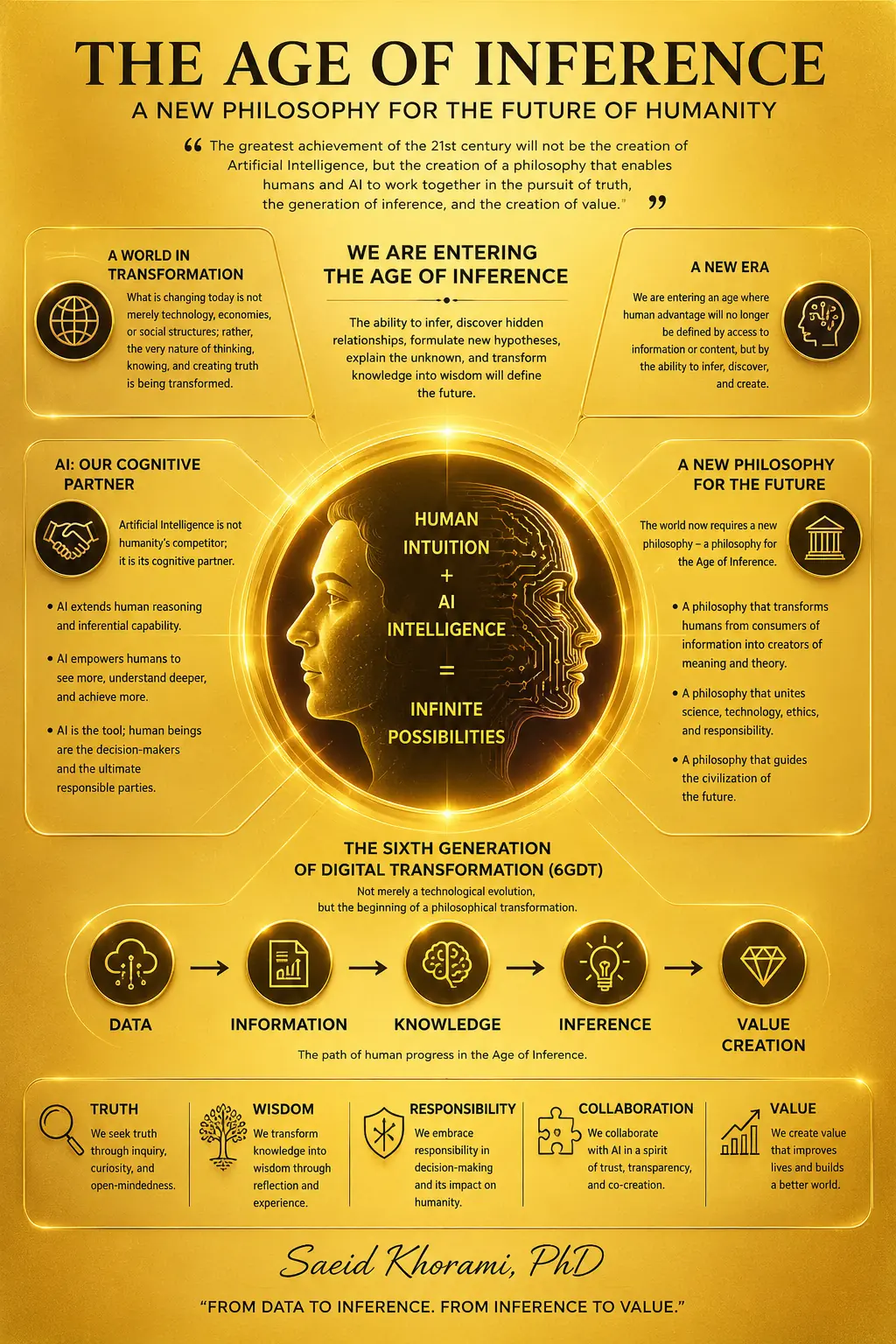
From known evidence toward relationships, hypotheses and discovery.
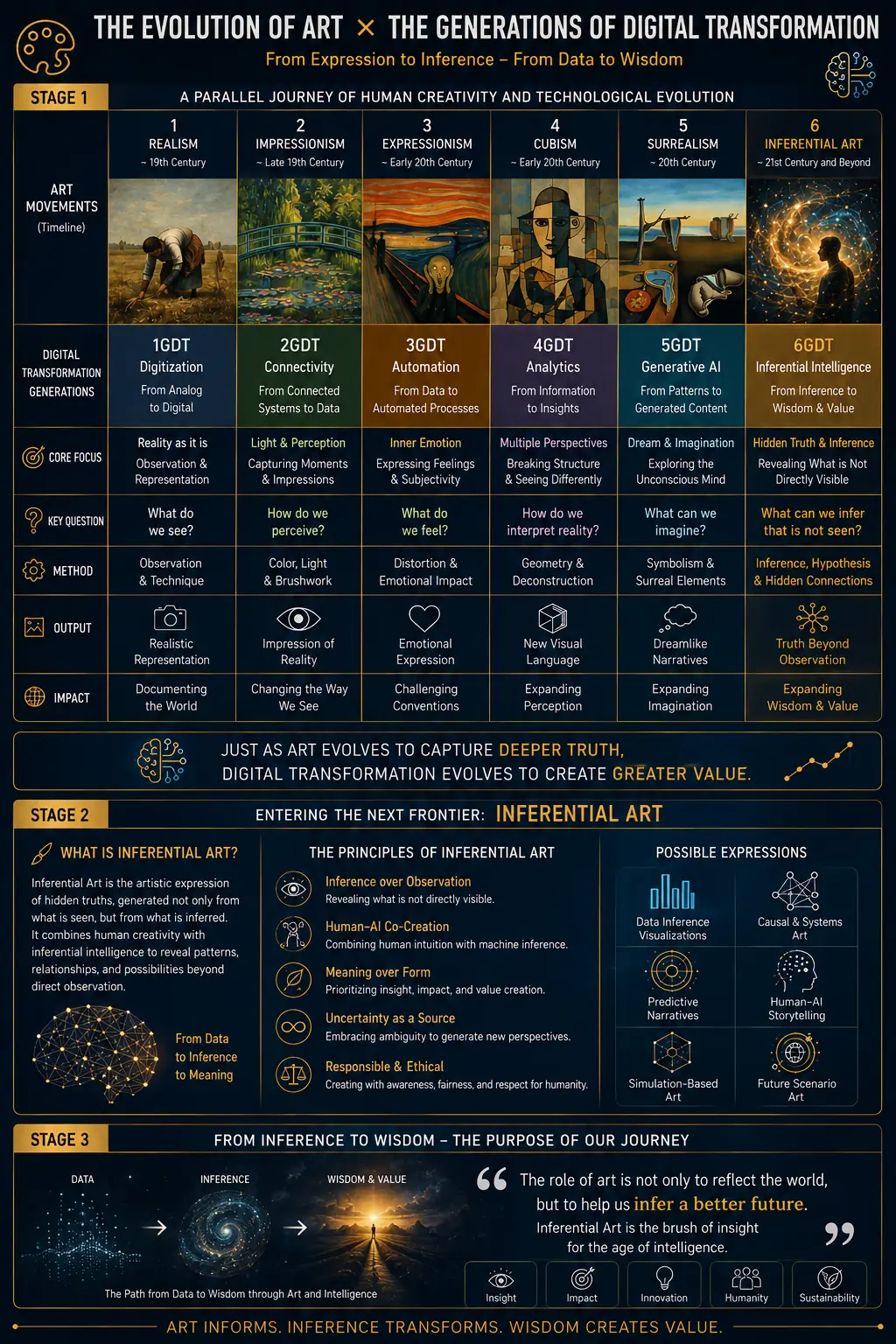
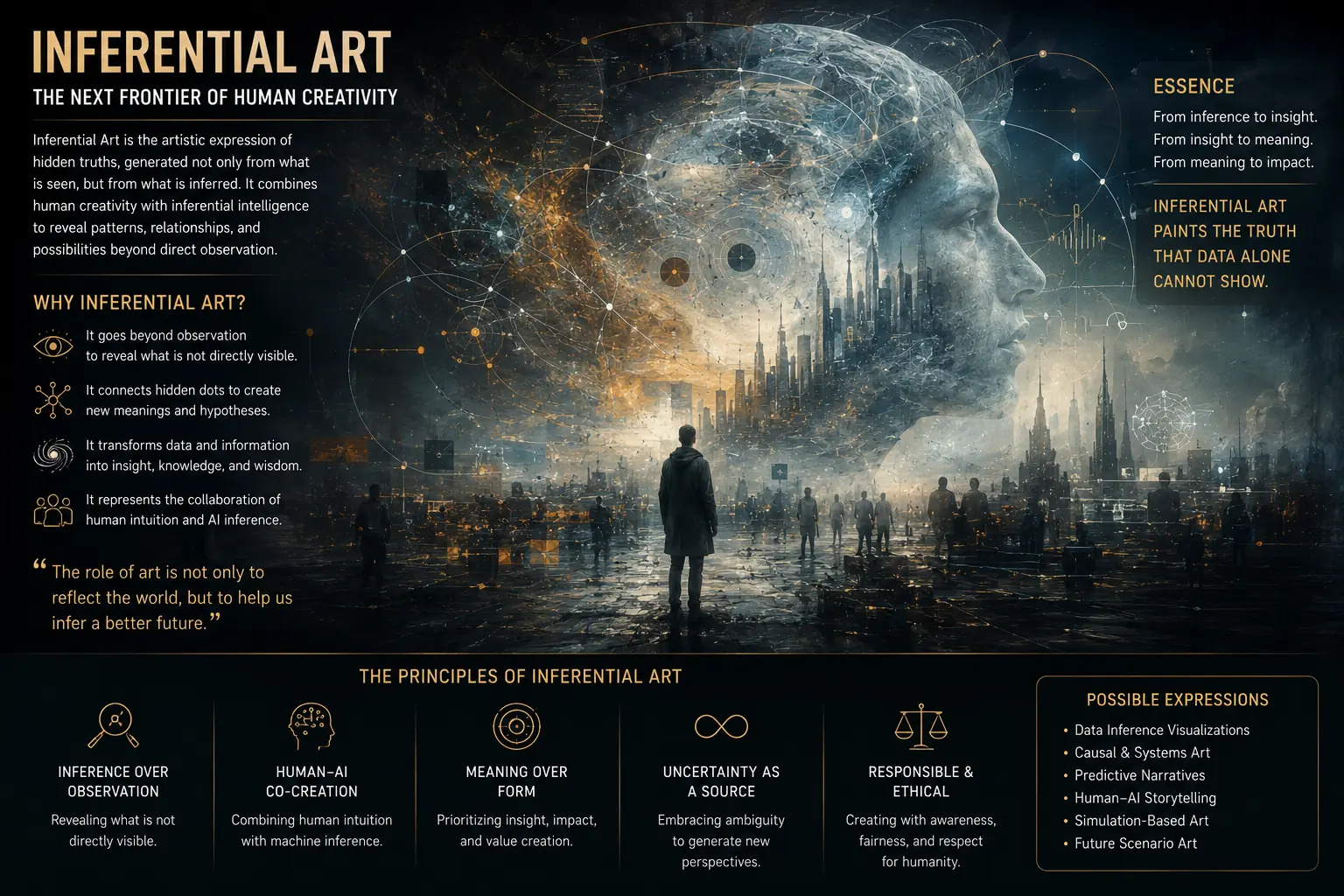
A current seven-day technology window powered by Google News with Yahoo News and MSN coverage.
The newest verified-source signal will appear here.
Technology headlines are collected only from Google News, Yahoo News and MSN.
Play the visual briefing with narrated context for the current lead technology story.
My research examines how Business Intelligence may evolve when AI moves beyond generation and prediction toward connecting evidence, questioning causality, forming hypotheses and supporting discovery.
From dashboards and prediction toward reasoning layers that improve understanding, judgment and strategic decision-making.
Explore Business Intelligence →The ability to move from known evidence toward relationships, hypotheses, causal questions and deeper explanations.
Explore Inferential Intelligence →A proposed framework for the transition from generative systems toward inferential intelligence, Human–AI co-discovery and knowledge creation.
Explore 6GDT →An independent 6GDT interpretation of The Economist’s visual premise on AI politics in Washington—and the institutional learning gap behind it.
Read the bilingual analysis →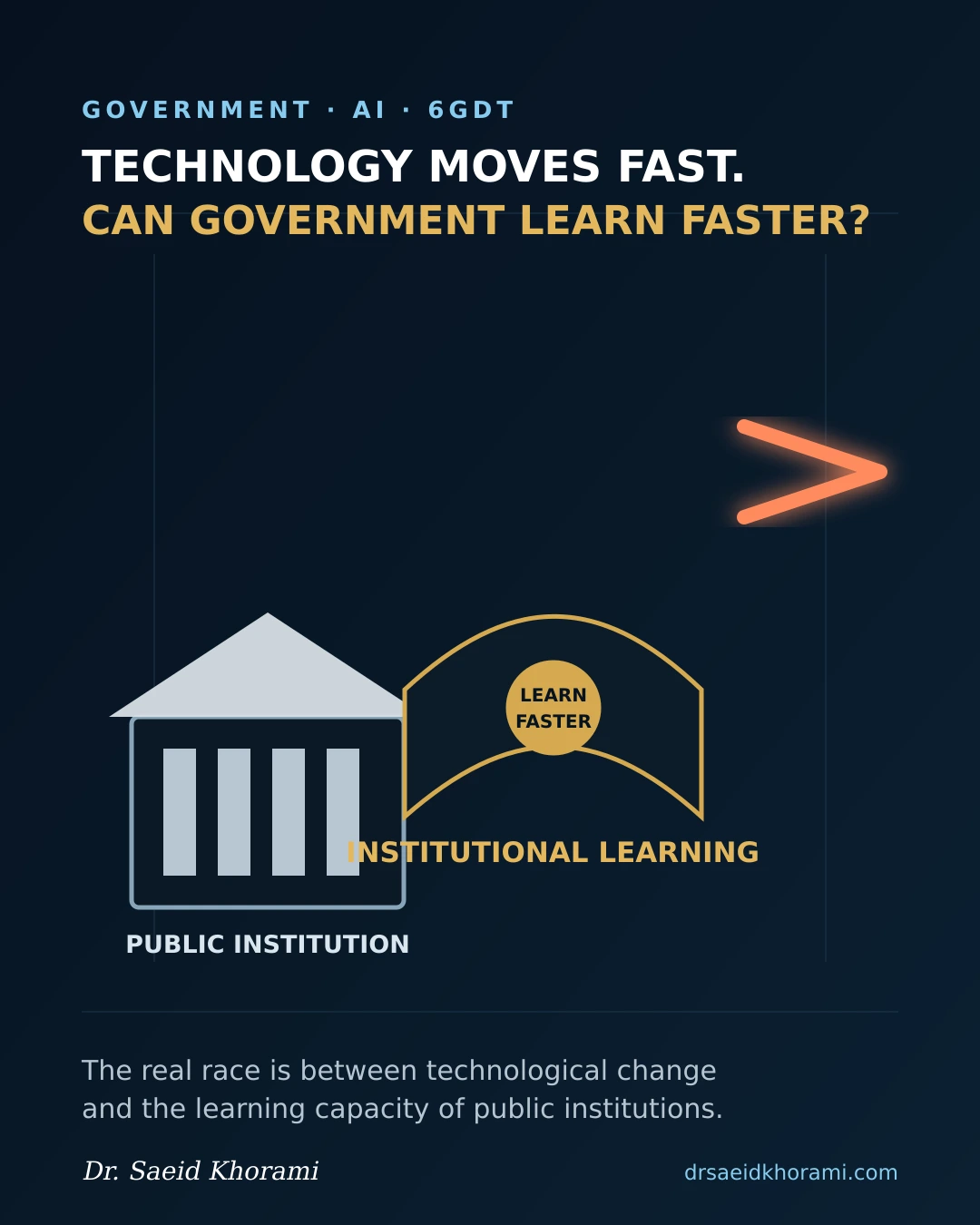
A practical 6GDT sport framework connecting prediction, causal inference, counterfactual reasoning, human judgment and validation before action.
Explore the sport framework →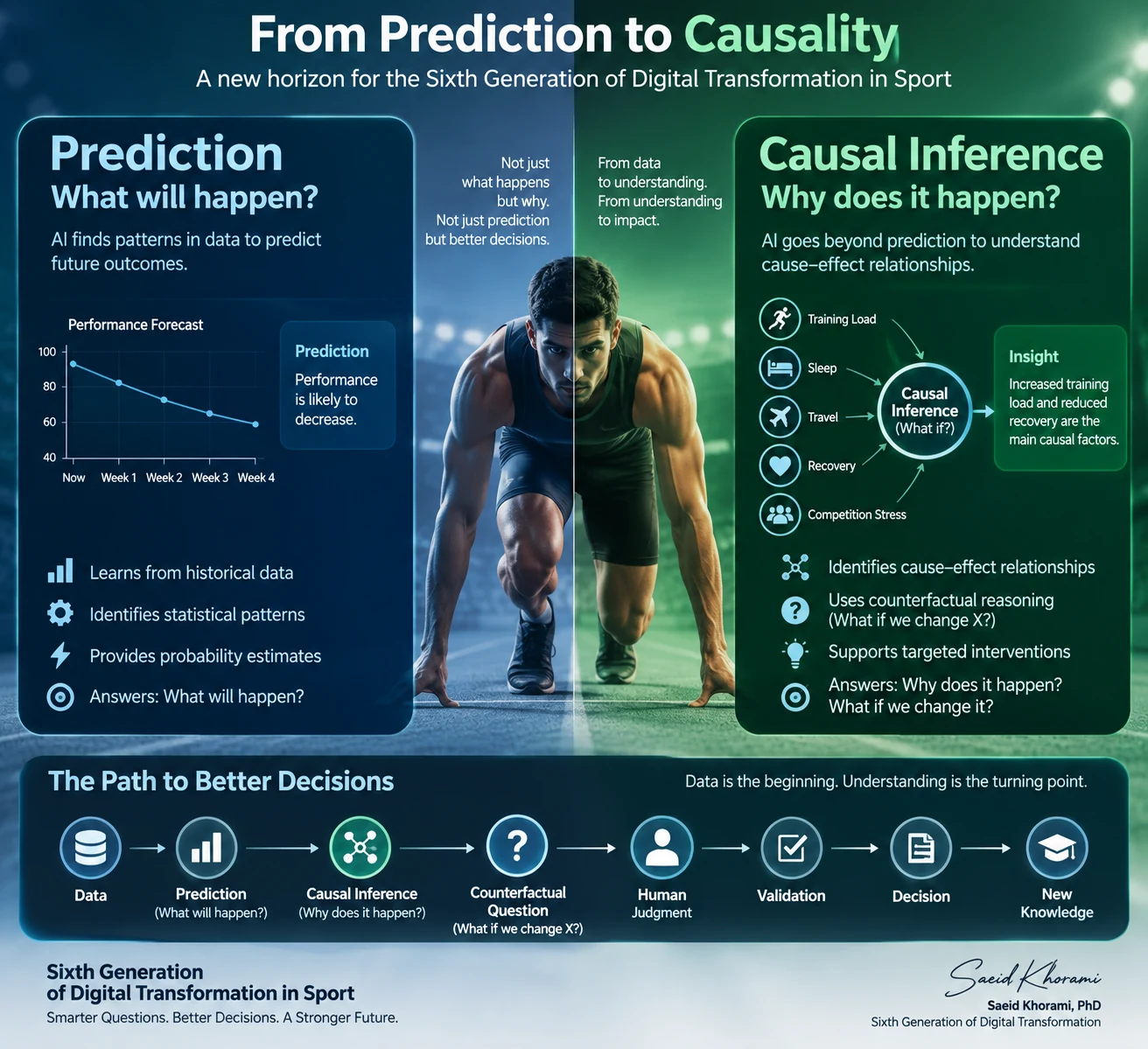
Only when evidence and failure are validated, retained and carried into the next public decision.
Read the evidence-led analysis →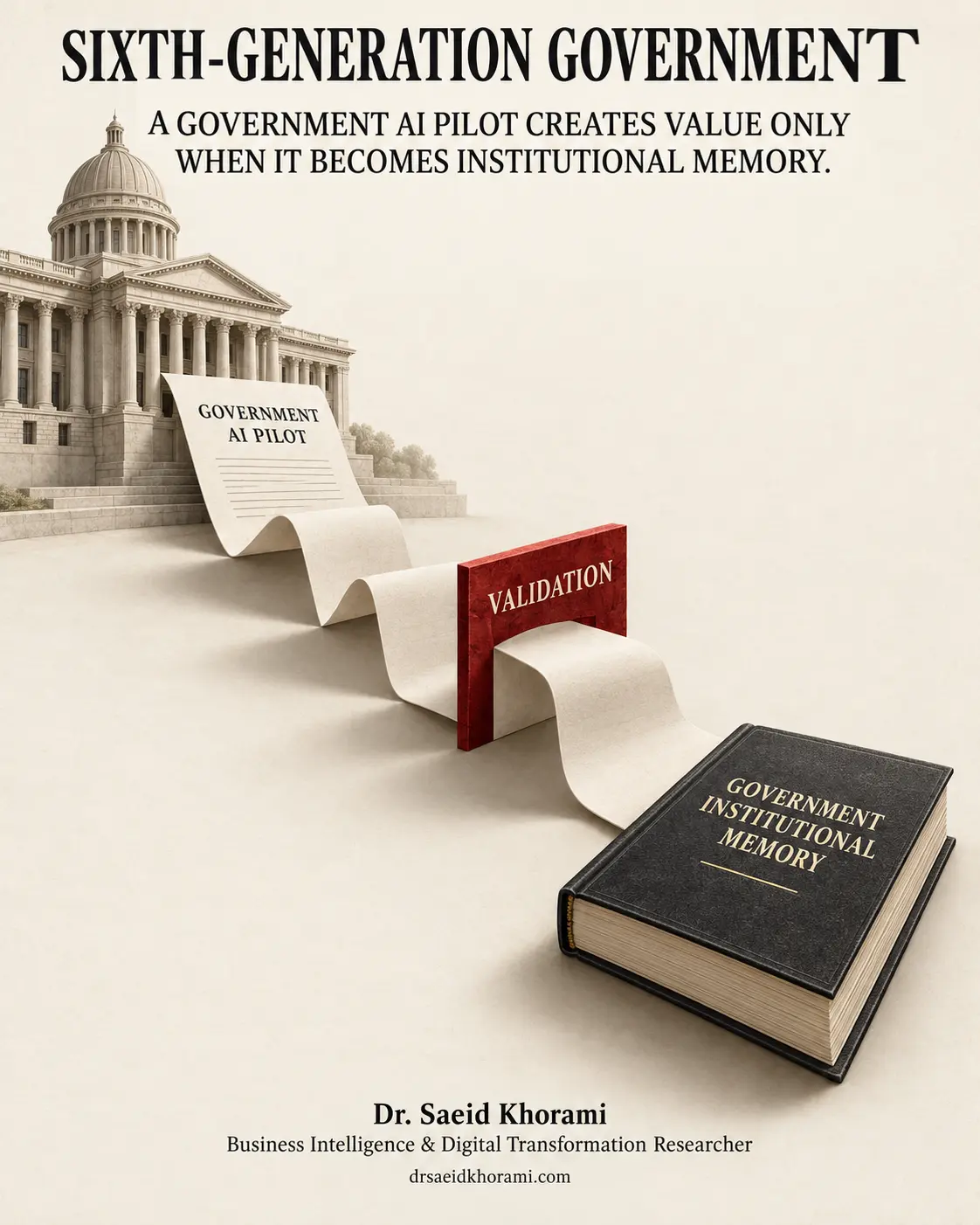
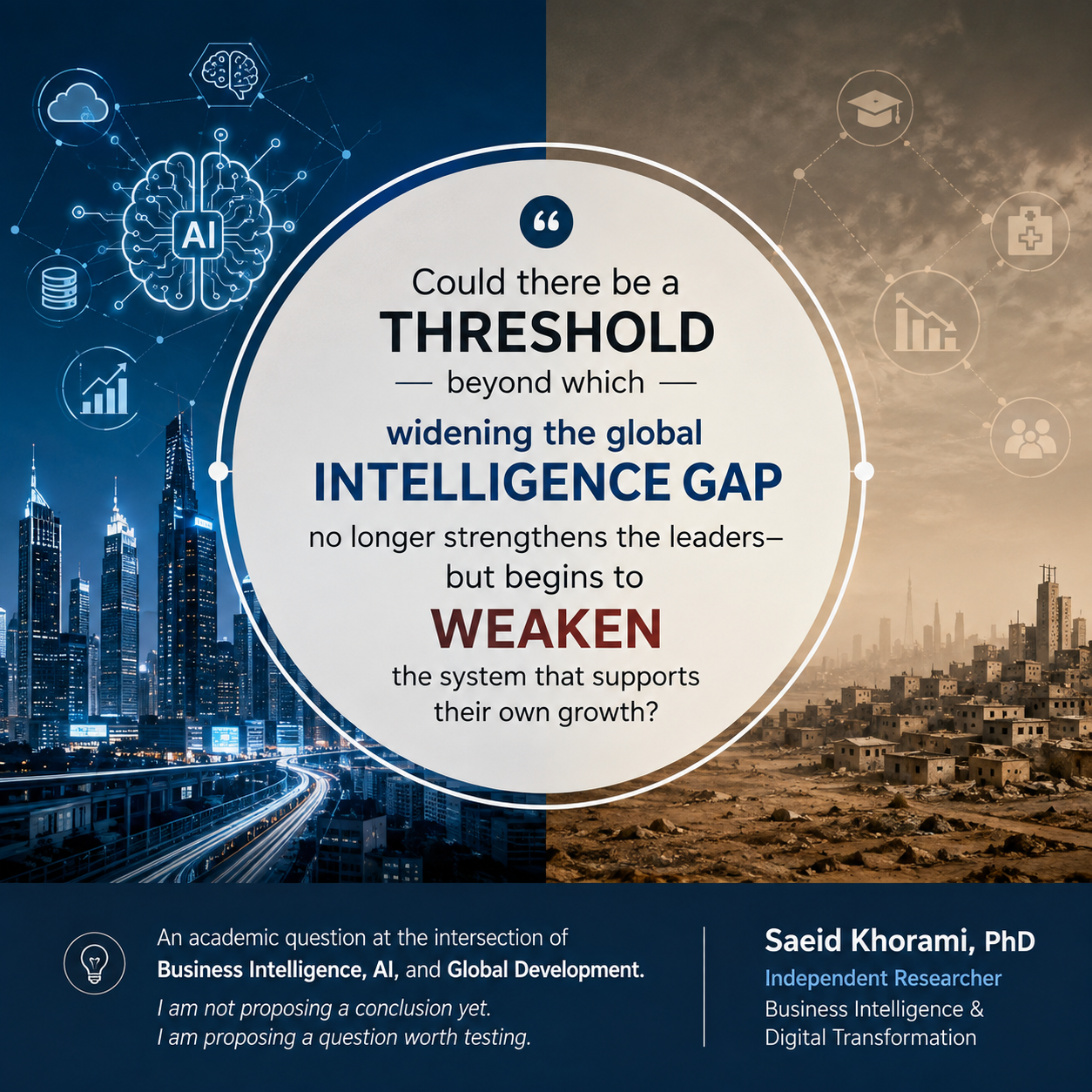
Can extreme intelligence asymmetry pass a critical threshold—turning the leaders’ advantage into systemic fragility and rebound?
Explore the three-stage framework →Part 02 examines the shift from selection to legitimation: when formal procedure, credible participants, and apparent competition may generate acceptance for a pre-shaped outcome.
Read Management Research Question No. 02 →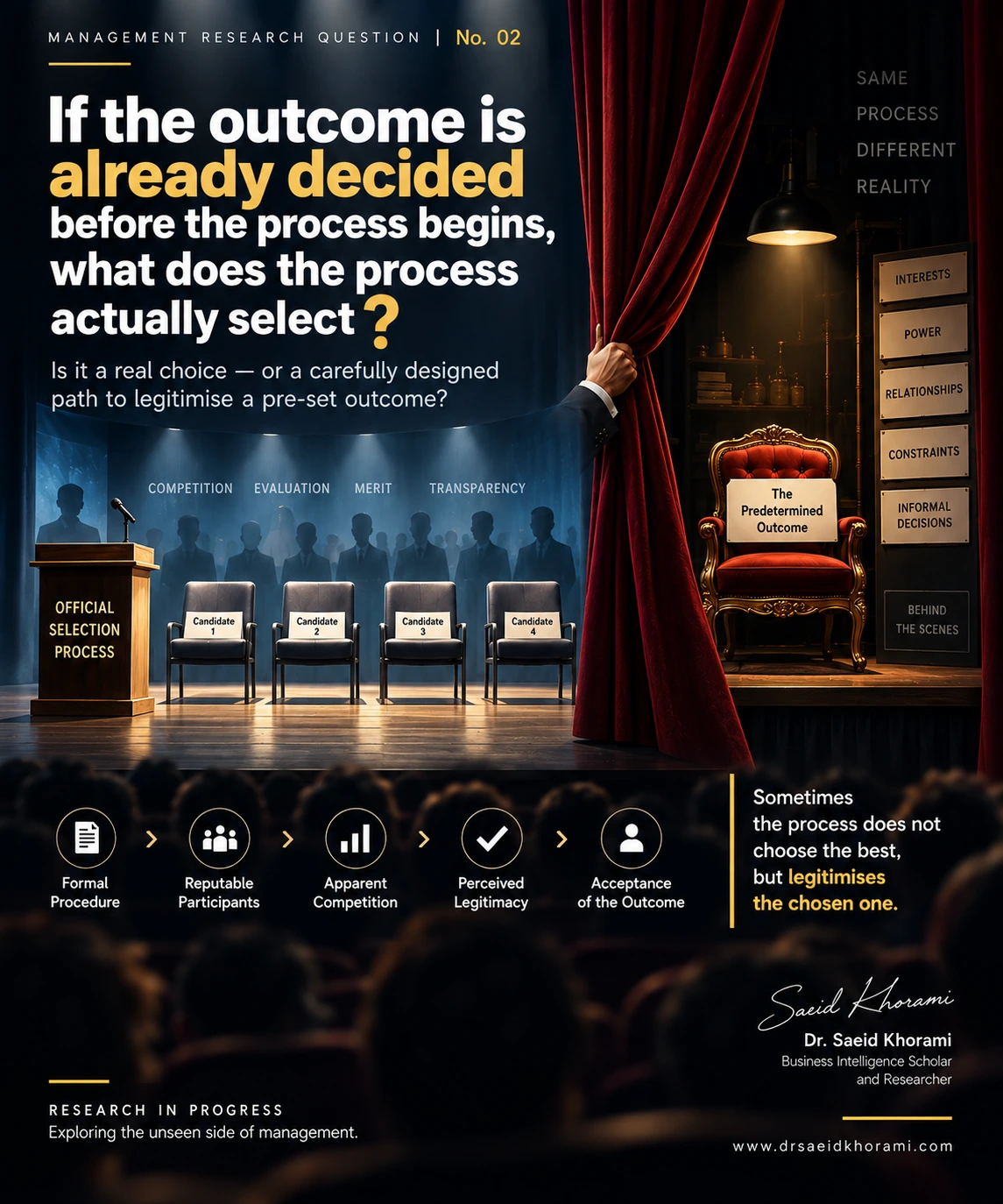
A research inquiry into manufactured legitimacy, selection processes, and the transfer of participants’ credibility to a predetermined outcome.
Read Management Research Question No. 01 →
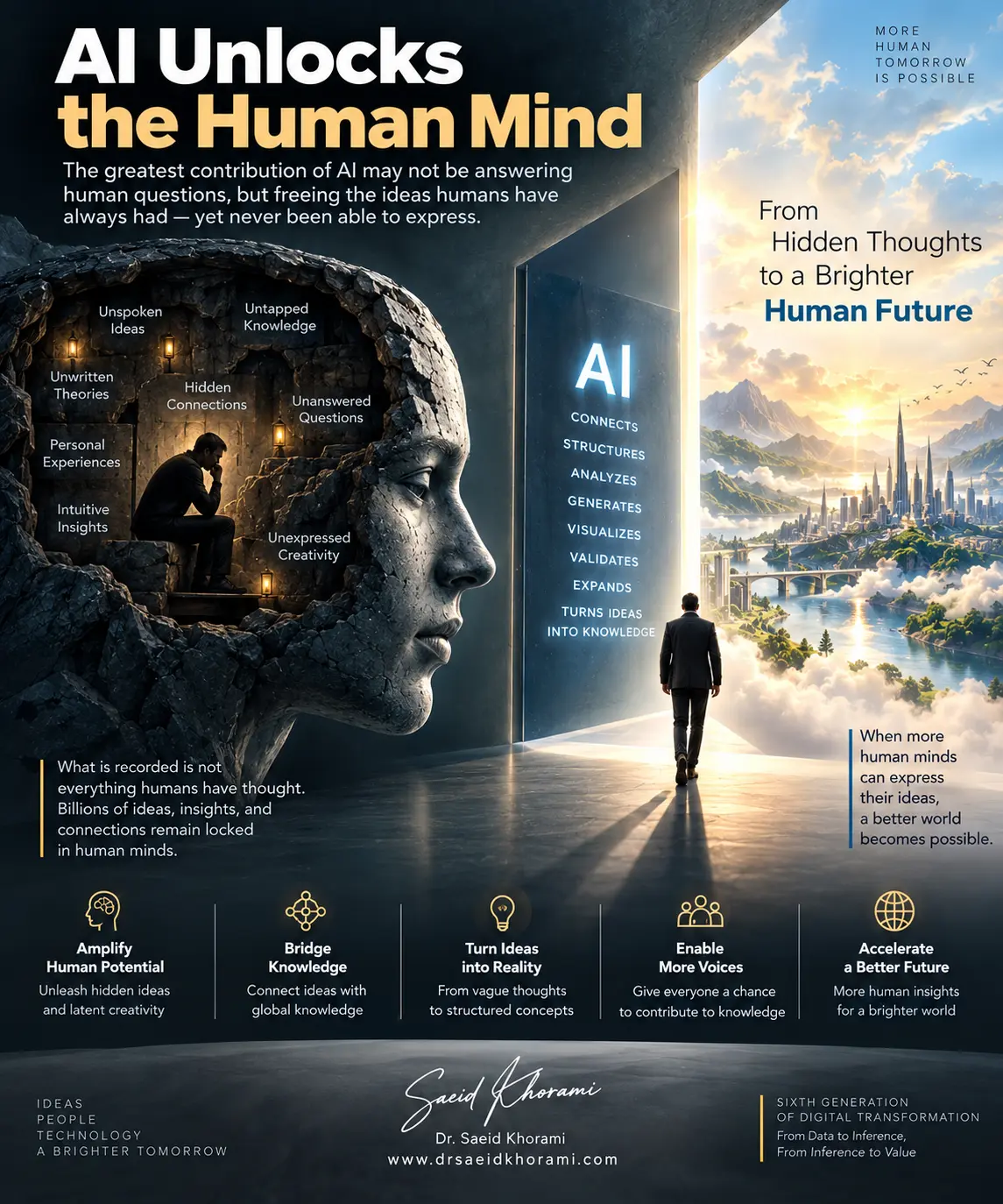
What if AI’s greatest contribution is not answering for humanity, but releasing thoughts humanity could never fully express?
Read the Inferential Liberation Hypothesis →
Business Intelligence Researcher · PhD in Information Technology Management
Research focus: 6GDT, Inferential Intelligence, Human–AI collaboration and strategic decision-making.
From Data to Inference. From Inference to Value.Selected market, digital-asset, BI and AI signals are presented as context for strategic interpretation and decision-making — not as investment recommendations.
Method note: “Current Items” is the number of entries loaded from named BI sources. It is a feed count—not an activity, performance, or investment score.
Market data may be real-time or delayed depending on the exchange and data provider. Exchange status and the timestamp shown by the market widget are the authoritative freshness indicators.
Current source-based market developments are loading.
The dashboard will translate market events into decision context.
Business implications will be separated from the underlying source headline.
This layer combines market, crypto, BI and AI activity into a concise decision-support perspective. It supports human judgment; it does not replace it.
Product, analytics, data platform and AI-assisted BI developments will appear here.
Updating →I am a Business Intelligence researcher with a PhD in Information Technology Management. My current work explores how AI may move from generation toward inference — and what that shift means for organizational intelligence, strategic decisions and digital transformation.
My research explores how organizations and societies move beyond digitization and content generation toward inference, judgment, and sustainable value creation. The central research trajectory connects 6GDT, the Age of Inference, Inferential Intelligence, and Neo-Inference Science.
NIS is developed as an underlying theoretical program for Human–AI co-discovery, recursive knowledge evolution and the study of inference. It supports the broader 6GDT research agenda rather than replacing it.
Within this program, 6GDT is the primary transformation framework, Inferential Intelligence is the central capability, and Neo-Inference Science is an underlying theoretical development for Human–AI co-discovery.
Peer-reviewed work by Saeid Khorami on digital transformation in higher education.
Research identifying and validating technological, managerial and human factors shaping digital transformation in higher education.
View journal article →A meta-synthesis study presenting a structured model for digital transformation across universities and higher-education institutions.
Journal article · DOI 10.61838/dtai.2.3.3 →A simple contact point—without separate, repeated social-media sections.